THE BEGINNING OF A DAREDEVIL
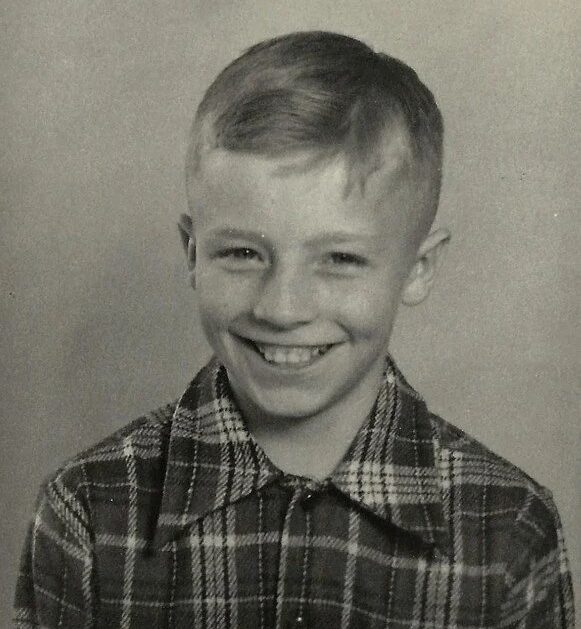
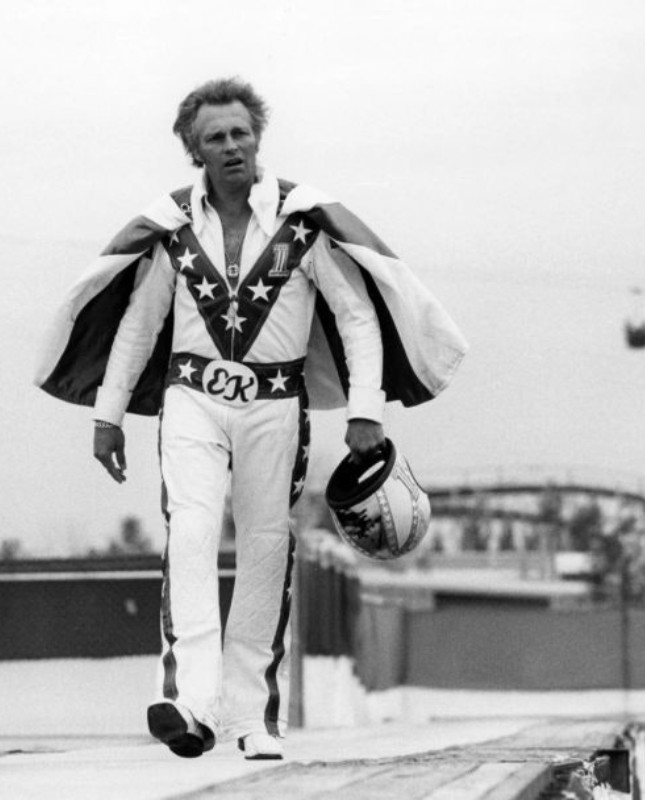
Evel Knievel, born Robert Craig Knievel in Butte, Montana, didn’t start as a legend; he built himself into one. Raised in a tough mining town, he showed early signs of ambition, risk-taking, and relentless drive. From racing bikes as a kid to getting into trouble as a teenager, Knievel’s path was anything but ordinary. It was during a 1956 arrest that he earned the nickname “Evel Knievel,” a name that would soon become synonymous with fearless stunts and larger-than-life performance.
If you fall during your life, it doesn’t matter. You’re never a failure as long as you try to get up.
TURNING RISK INTO A CAREER
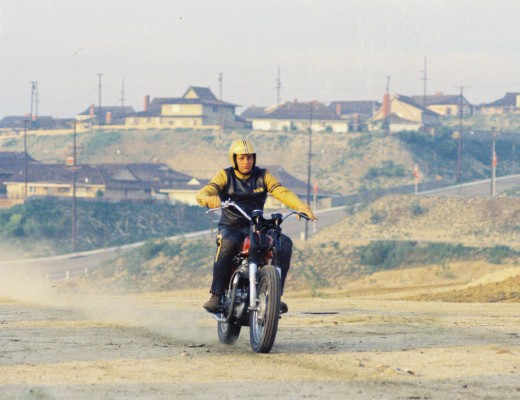
While trying to support his growing family, Knievel realized his thrill-seeking instincts could become something bigger. He launched his own motorcycle stunt show, managing everything himself, from promotions and ticket sales to performing and emceeing.
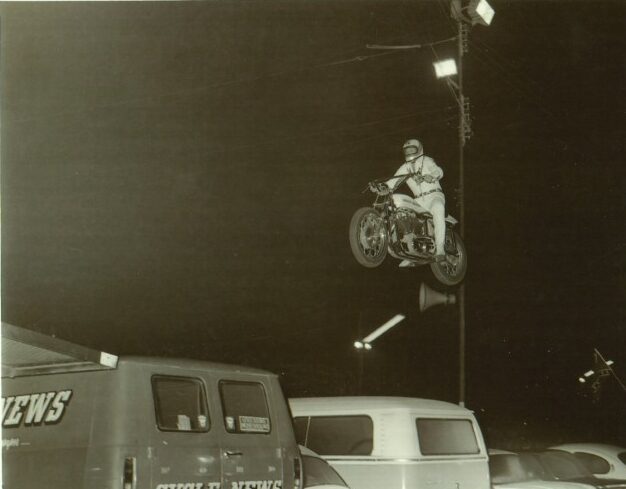
His early shows featured daring jumps over animals, cars, and trucks, and even when landings didn’t go as planned, the spectacle drew attention. With the help of a motorcycle sponsor, he officially debuted in 1966 and began building a reputation. Traveling from town to town, he constantly raised the stakes, jumping more cars each time he returned to keep crowds coming back.
Even after injuries forced him to scale back his team, Knievel went solo, driven by determination and belief in his act. His mix of showmanship, risk-taking, and relentless drive quickly set him apart and laid the foundation for his rise to fame.
MAKING HISTORY AT CAESARS PALACE
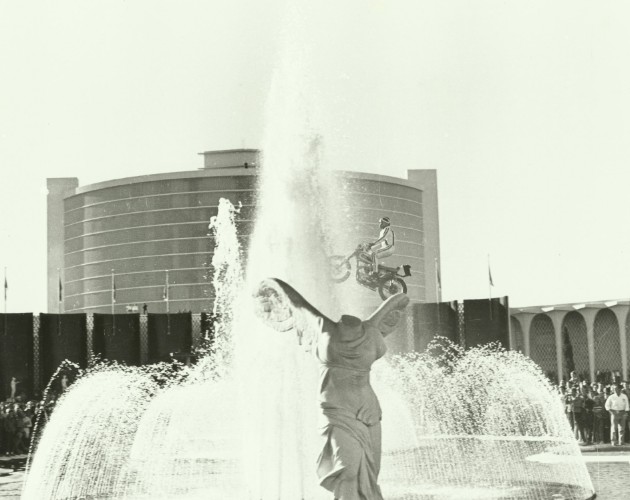
While in Las Vegas in 1967, Evel Knievel set his sights on the iconic Caesars Palace fountains, determined to attempt a jump no one had ever tried. To secure approval, he used bold tactics, creating fake companies and generating media buzz, to persuade CEO Jay Sarno. Although ABC declined to air it live, they agreed to review the footage.
On December 31, 1967, Knievel made the attempt. His takeoff was flawless, but he landed short, crashing violently and suffering severe injuries that left him in a coma for 29 days. When the footage later aired, it captivated audiences nationwide, turning him into a household name and launching his legendary career.
PUSHING THE LIMITS OF
HUMAN POSSIBILITY
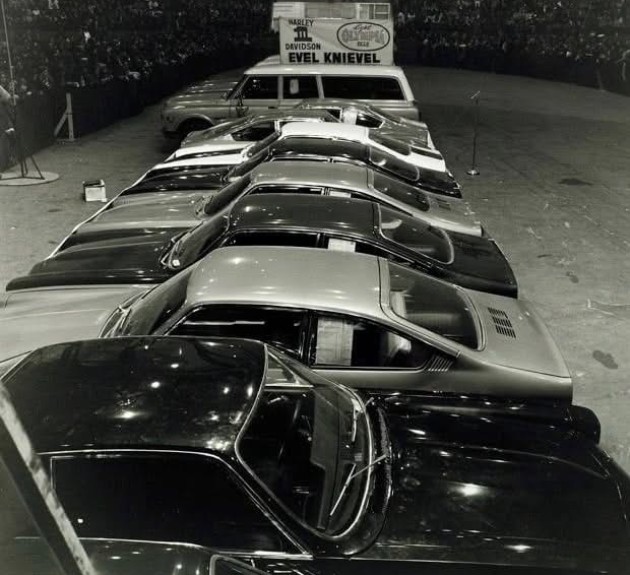
Following Caesars Palace, Evel Knievel became unstoppable. Throughout the late 1960s and early 1970s, he pushed the limits of what audiences thought was possible. He performed increasingly dangerous jumps over cars and trucks, and over longer distances, often returning to the same venues for even bigger stunts. In 1968 alone, he attempted to jump 15 Ford Mustangs, breaking his leg and foot, then returned later that year to continue performing.
Despite repeated crashes and serious injuries, including broken bones, concussions, and multiple fractures, he refused to stop. His philosophy was simple: once he gave his word, he would follow through. This relentless commitment and willingness to risk everything became central to his identity and fueled his growing legend.
BECOMING A GLOBAL ENTERTAINMENT ICON
As his stunts grew bigger, so did his fame. Evel Knievel became one of the most recognized performers in the world, with his jumps regularly broadcast on ABC’s Wide World of Sports, reaching millions of viewers.
He transformed stunt riding from small fairground acts into sold-out stadium events, drawing massive crowds and setting attendance records, like over 100,000 fans at the Houston Astrodome. International performances, including Wembley Stadium in London, further cemented his global reach.
A generation of kids grew up inspired by Knievel, recreating his jumps on bikes and toys. His combination of fearless stunts, showmanship, and media presence made him not just a performer but a cultural icon.
THE SNAKE RIVER
CANYON ATTEMPT
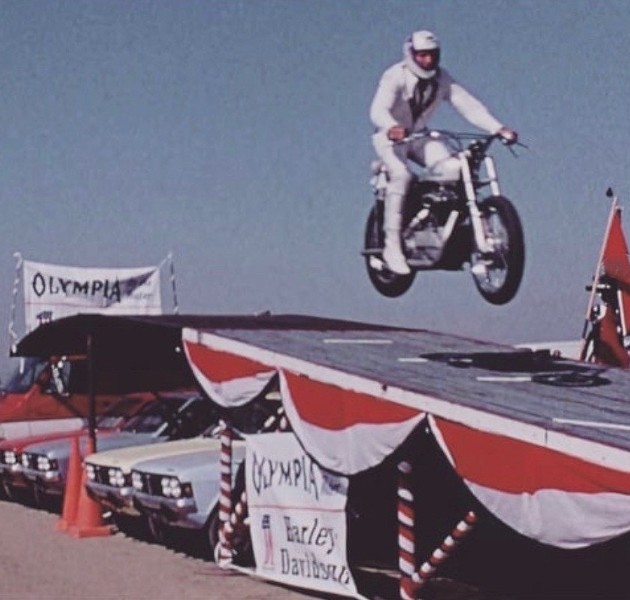
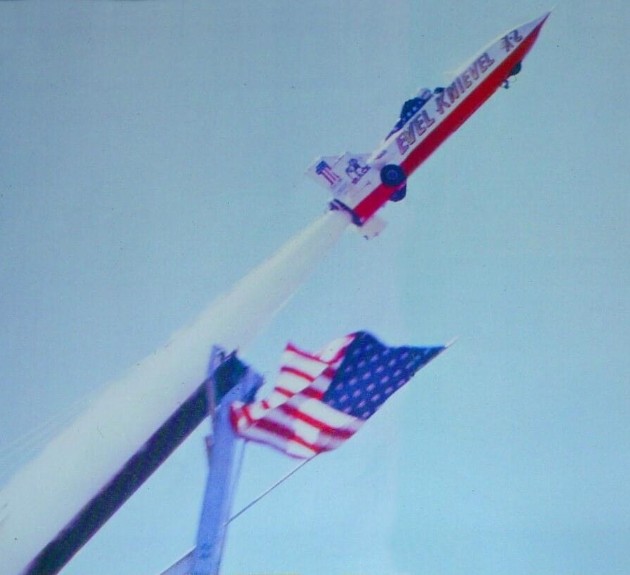
In 1974, Evel Knievel attempted one of the most ambitious stunts in history, a jump across Idaho’s Snake River Canyon. After being denied permission to jump the Grand Canyon, he set his sights on creating something even more daring. Working with engineers, including former NASA specialists, he developed the Skycycle X-2, a rocket-powered vehicle designed specifically for the jump. Knievel famously claimed he had “bought his own canyon” to make it happen.
On September 8, 1974, the attempt took place. During launch, a parachute deployed too early, creating drag that prevented him from clearing the canyon. The craft drifted into the canyon below. Despite the failure, Knievel survived with only minor injuries.
Even though the jump didn’t succeed, it became one of the most iconic moments of his career, demonstrating his unmatched willingness to risk everything in pursuit of the impossible.
BREAKING RECORDS & LEGENDARY COMEBACKS
Evel Knievel’s career was defined not just by his stunts, but by his ability to come back stronger after every fall. After crashes that left him with broken hips, back, arms, and legs, he repeatedly returned to perform again.
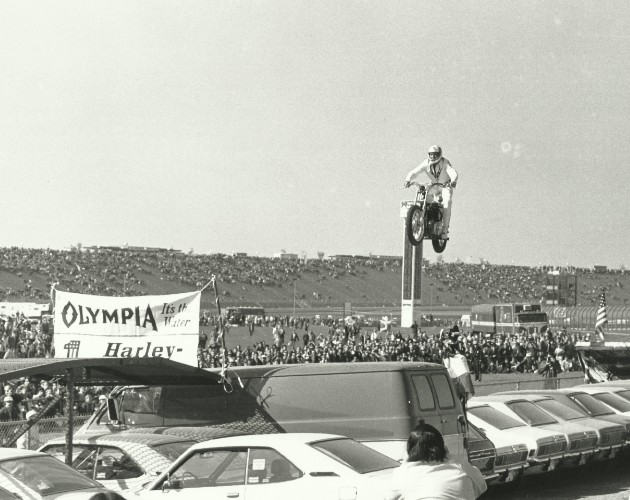
In 1973, he successfully jumped 50 stacked cars in Los Angeles, a record that stood for 35 years. He continued to perform weekly at times, earning up to $25,000 per show and constantly raising the bar.
Even when injuries seemed career-ending, Knievel refused to stay down. Each comeback added to his legend, reinforcing his reputation as one of the most fearless and determined performers in history.
FINAL STUNTS & RETIREMENT
By the mid-1970s, the toll of years of high-risk stunts began to catch up with Evel Knievel. In 1975, he crashed at Wembley Stadium in front of 90,000 fans, breaking his back, but he famously walked off the field, refusing a stretcher. He returned again shortly after, successfully jumping 14 buses at Kings Island and setting new records, but continued injuries made it harder to maintain the same level of performance.
A planned shark jump in 1977 ended in a serious accident during rehearsal, further signaling the end of his era of major stunts. Recognizing the risks, Knievel stepped away from large-scale performances and transitioned into public appearances and speaking engagements, leaving behind a career that had already changed entertainment forever.
A LEGACY THAT STILL INSPIRES
Evel Knievel passed away on November 30, 2007, at the age of 69, but his legacy continues to live on. Known for his fearless attitude, commitment to his word, and ability to captivate millions, he redefined what it meant to be a daredevil.
His influence can still be seen today in extreme sports, live entertainment, and pop culture. More than just a stunt performer, Knievel became a symbol of risk, resilience, and ambition, proving that limits are meant to be pushed. Today, his story continues to inspire new generations to take chances, chase big ideas, and defy the odds, just as he did throughout his legendary life.
THE TIMELINE
STUNTS THAT MADE HISTORY
1938
Birth & Early Influence
Born Robert Craig Knievel in Butte, Montana, Evel grew up in a rugged mining town that shaped his fearless attitude. Raised by his grandparents, he showed early signs of ambition and a taste for risk, selling newspapers, racing bikes, and constantly pushing limits.
1956
The Nickname Begins
After getting into trouble as a teen, including a choice between jail and the Army, he began turning his life around. He worked various jobs before realizing his knack for thrill-seeking could become something bigger. His nickname “Evel Knievel” came after a 1956 arrest, inspired by another inmate known as “Awful Knofel,” and it became the name that defined his legendary career.
1966
Official Debut
Knievel officially debuted his motorcycle stunt show while working to support his family, managing everything from promotion and ticket sales to performing and emceeing. His daring jumps, often over animals, trucks, and eventually cars, combined with relentless touring, quickly built a grassroots following. Despite crashes and serious injuries, he continued raising the stakes and returning to perform, fueling his growing reputation for fearlessness and laying the foundation for national fame.
1967
Caesars Palace Jump
While in Las Vegas in 1967, Evel Knievel saw the fountains at Caesars Palace and decided to jump them. To secure the stunt, he used bold tactics, including fake companies and media calls, to convince CEO Jay Sarno to approve it. ABC declined to air it live but agreed to consider the footage afterward.
On December 31, 1967, Knievel made the jump. His takeoff was perfect, but he landed short, crashing violently and suffering multiple severe injuries that left him in a coma for 29 days. Despite the near-fatal crash, the footage aired later and made him a national sensation, launching his career to new heights even as doctors doubted he’d ever jump again.
1968-1970
Spotlight Jumps
To stay in the spotlight, Evel Knievel promoted a daring Grand Canyon jump and continued performing despite repeated, often severe crashes. In 1968, just months after a near-fatal accident, he attempted to jump 15 Ford Mustangs in Scottsdale, Arizona, breaking his leg and foot. Undeterred, he returned later that year, earning up to $25,000 per performance and successfully jumping almost weekly until another crash in Carson City left him with a broken hip.
1970
Pepsi Trucks Jump
In 1970, Knievel crashed while attempting to jump 13 Pepsi trucks in Yakima, Washington, suffering a broken collarbone, a compound fracture in his arm, and both legs broken. Still, he pressed on, setting attendance records in 1971 with over 100,000 tickets sold at the Houston Astrodome and successfully jumping 19 cars in California.
1972-1973
Injury & Record Jump
A 1972 crash in Daly City resulted in a broken back and concussion, but by 1973 he returned once again, successfully jumping 50 stacked cars in Los Angeles, a record that stood for 35 years and cemented his legacy as one of history’s most fearless stunt performers.
1974
Snake River Canyon Jump
After the government denied him permission to jump the Grand Canyon, Knievel attempted a rocket-powered jump over Idaho’s Snake River Canyon. The parachute deployed early, preventing success, but he survived and drew massive global attention.
1975
Wembly Jump
After the Snake River jump, Evel Knievel returned to motorcycle jumping, with ABC's Wide World of Sports televising his performances. On May 26, 1975, in front of 90,000 fans at Wembley Stadium in London, he crashed while attempting to jump 13 buses. Despite breaking his back, Knievel addressed the crowd, announced his retirement, and refused a stretcher, famously walking off the field, saying, “I came in walking, I’m going out walking!”
1975
Kings Island Jump
After recovering, Evel Knievel returned to jumping and, on October 25, 1975, successfully cleared 14 Greyhound buses at Kings Island in Ohio. Despite a rough landing that broke his Harley-Davidson’s frame, he set a 163-foot record and achieved the highest ratings in ABC's Wide World of Sports history. He briefly retired again but soon returned, shifting to shorter jumps. In 1976, he successfully jumped seven buses at the Seattle Kingdome, though he felt it wasn’t his best performance.
1977
Shark Jump
In January 1977, Evel Knievel planned a televised jump over a tank of live sharks in Chicago, inspired by Jaws. During rehearsal, he crashed into a cameraman, breaking his arms and causing the man to lose an eye. Deeply shaken, Knievel withheld the footage for years and retired from major stunts, shifting to speaking appearances instead, saying a professional should know when to stop.
2007
Later Life & Death
In later years, he remained active through speaking engagements and public appearances, reinforcing his legacy as a cultural icon. Evel Knievel died in Clearwater, Florida, on November 30, 2007, at age 69. He was laid to rest in his hometown of Butte, Montana, following a large funeral at the Butte Civic Center attended by thousands. The service featured a tribute from Matthew McConaughey, honoring Knievel’s life and legacy.