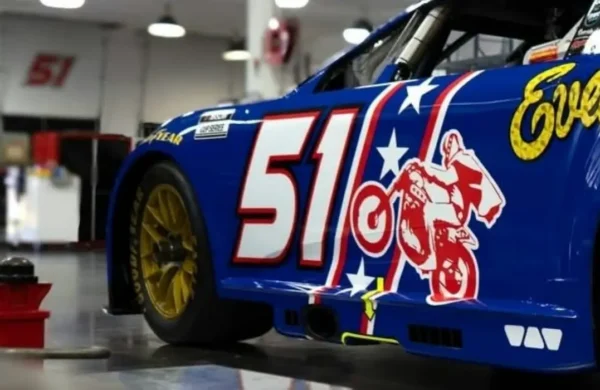

Picture Evel Knievel sitting on his motorcycle, getting ready for another jump. The crowd knows exactly what he’s about to attempt, and everyone is waiting to see if he’ll make it. Even watching footage of those old stunts today can make you nervous. You know how the jump ends, so why are you still holding your breath?
What’s interesting is that you don’t have to be the one taking the risk to feel some of that excitement. Watching someone else attempt something dangerous can be enough to get your heart going. Evel Knievel made a career out of that feeling, and his stunts still get a reaction from people today.
At the Evel Knievel Experience in the Las Vegas Arts District, that fascination comes to life through a Virtual Reality 4D Jump, an interactive Jump Planner, and more than 75 exhibits celebrating America’s original daredevil.
What Makes a Thrill So Exciting?
- Thrill-seeking is partly driven by how our brains respond to excitement, uncertainty, and perceived danger.
- A simulated stunt can create a convincing sense of risk without exposing participants to the dangers of an actual jump.
- Evel Knievel’s legendary stunts helped turn the anticipation of danger into a form of entertainment.
- The Evel Knievel Experience lets visitors explore that fascination through interactive exhibits and simulated thrills.
Las Vegas has always been a place where people come looking for excitement. But what makes one experience genuinely thrilling while another barely gets your attention?
Why Do We Keep Looking for New Experiences?
There is a good reason the same activities don’t always feel as exciting the second or third time around. Once we know what to expect, some of that initial anticipation fades. For people who enjoy novelty and excitement, trying something unfamiliar can bring back that feeling of discovery.
Las Vegas is a great example. The Las Vegas Convention and Visitors Authority has shown that visitors come for much more than gambling.
The LVCVA’s 2025 Visitor Profile drew on interviews with 5,409 visitors. It found that 49% came for vacation or pleasure and 20% to see friends or family, while just 7% named gambling as the main reason for the trip.
And many of those visitors have been here before. Only 10% of 2025 visitors were in Las Vegas for the first time, down from 24% in 2022.
For returning visitors, there’s an opportunity to discover something different. An unfamiliar experience can create a sense of anticipation that makes the outing memorable before it even begins.
How Do Some People Crave More Excitement Than Others?
Some people love the feeling of their heart racing before a big drop. Others would rather watch from a comfortable distance. Even when the danger is simulated, the anticipation can be enough to make an experience feel intense.
Psychologist Marvin Zuckerman spent decades studying sensation seeking, a personality trait associated with the desire for new, varied, and intense experiences.
Think about two friends standing at the top of a virtual stunt ramp:
- One can’t wait to experience the jump and see what happens.
- The other is already nervous, even though they know the experience is simulated.
Neither reaction is unusual. People differ in how much stimulation they enjoy, and Zuckerman’s research helps explain why the same experience can feel exciting to one person and overwhelming to another.
Stepping Into the Thrill of a Daredevil Jump
When you’re watching a motorcycle jump, it’s easy to forget just how different things look from the rider’s seat. There’s no way to know exactly what Evel was feeling, but you can imagine how nerve-racking those final seconds before takeoff must have been.
The Virtual Reality 4D Jump at the Evel Knievel Experience puts you in that position, at least for a few moments. With a VR headset and physical effects adding to the experience, you get a sense of what it might be like to approach the ramp yourself.
The Science Behind a Daredevil Jump
Before Evel Knievel could clear a row of cars or a wide gap, he had to get a few things right. How fast would he need to be going? Was the ramp angled correctly? And was there enough distance to make the landing? A mistake in any of those calculations could have serious consequences.
The Jump Planner at the Evel Knievel Experience gives visitors a chance to explore those factors. You can adjust your approach and see how different decisions affect the outcome, making the physics behind a stunt easier to understand.
It’s an interesting reminder that even the most daring stunts involve more than courage. There’s a lot to consider before the wheels ever leave the ramp.
The Lasting Fascination With Evel Knievel’s Legacy
It’s one thing to watch footage of Evel Knievel flying through the air. Seeing the motorcycles he actually rode is a little different. Some of that equipment was there for jumps that went terribly wrong, and it’s hard not to think about that when you’re standing right in front of it.
The Evel Knievel Experience brings that history together across more than 30,000 square feet, with 75+ exhibits and over 100 artifacts.
Some of the most recognizable pieces include:
- Big Red: The restored Mack truck that carried Evel’s traveling show across America.
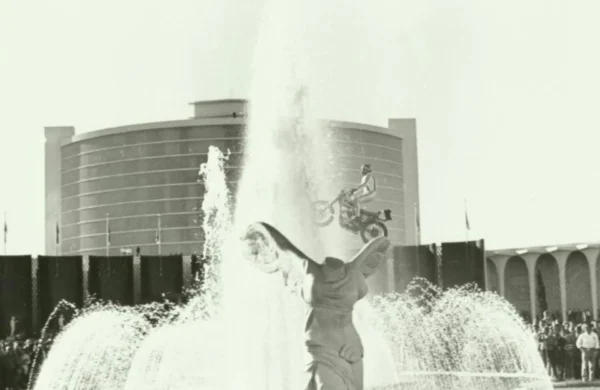
- Caesars Palace Helmet: A reminder of the infamous 1967 jump that helped make him a household name.
- Snake River Skycycle Exhibit: A look at his ambitious 1974 attempt to cross Idaho’s Snake River Canyon.
If you grew up watching Evel Knievel on ABC’s Wide World of Sports, you might recognize a few things from those televised jumps. And if you weren’t around for any of that, seeing the motorcycles and equipment up close gives you an idea of just how wild his stunts were at the time.
The Thrill Doesn’t End With the Jump
Evel Knievel spent much of his career attempting jumps that most people wouldn’t even consider. That’s what makes his story so unusual. He was willing to take risks that millions of people were perfectly happy to experience from the safety of their living rooms.
A visit to the Evel Knievel Experience in the Las Vegas Arts District offers a chance to think about that question a little differently. After seeing what Evel attempted and trying the interactive experiences yourself, you might come away with a better idea of what makes a good thrill so hard to resist.
The attraction is located at 1001 S. 1st Street, and most visitors should plan for about 60 to 90 minutes. The Virtual Reality 4D Jump requires an additional ticket. You can also check our visitor guide for current hours, admission details, and other information before your visit.
Frequently Asked Questions
Can something feel dangerous even when you know it’s safe?
Definitely. Think about standing at the top of a roller coaster just before it drops. You know the ride is designed to keep you safe, but your stomach might still turn. VR can play on that same feeling by making a simulated jump seem real enough to get a physical reaction.
Why do some people enjoy adrenaline more than others?
Some people can’t get enough of roller coasters and other high-energy experiences. Others are perfectly happy watching from the sidelines. Psychologists call this difference in appetite for excitement “sensation seeking.” Everyone has their own comfort level, which helps explain why the same stunt can be thrilling to one person and terrifying to another.
Can virtual reality make a stunt feel realistic?
VR can create a convincing sense of movement and height by placing you in a simulated environment. Adding physical effects, as the Virtual Reality 4D Jump at the Evel Knievel Experience does, can make the experience feel more immersive, even though you’re not actually performing the stunt.
Experience the Impossible in the Arts District
Ever wondered what it’s like to face a daredevil jump? Contact the Evel Knievel Experience in the Las Vegas Arts District to find out how you can explore that thrill through the Virtual Reality 4D Jump and put your stunt-planning skills to the test with the interactive Jump Planner.
Ready to experience the rush for yourself? Book your tickets and discover a different kind of Las Vegas adventure.